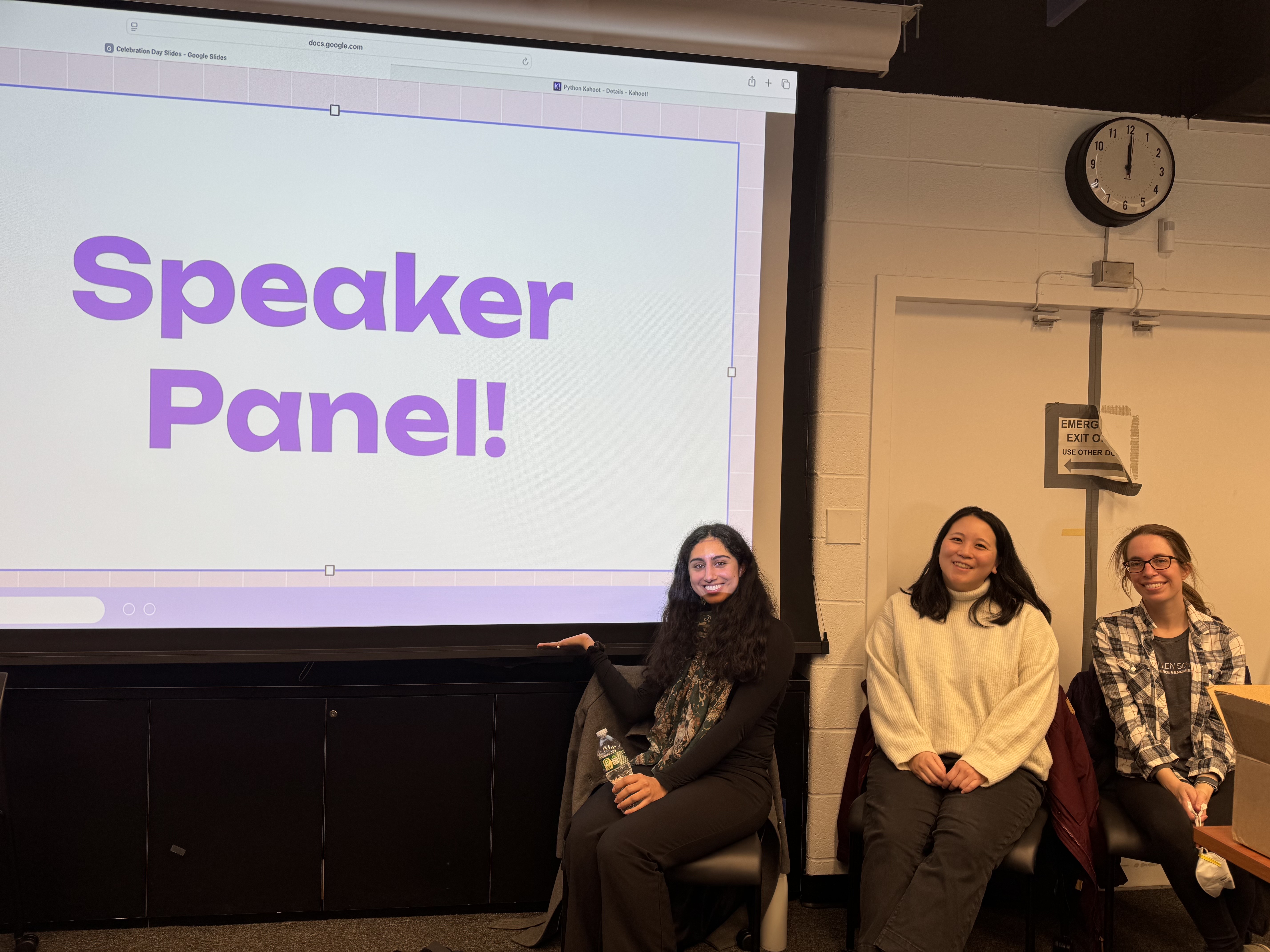
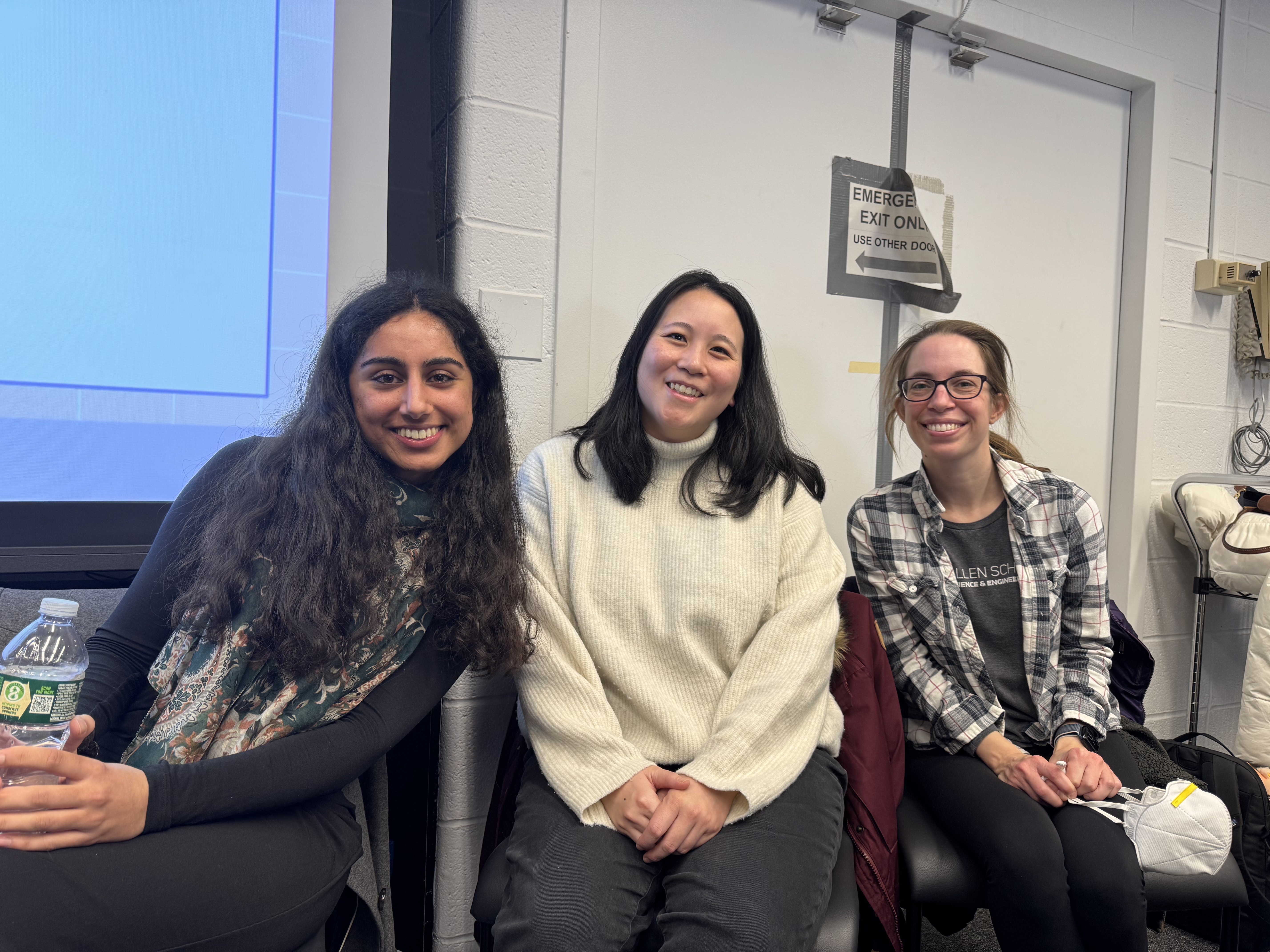
Columbia's Girls Who Code panel event with Dr. Tiffany Tseng and Dr. Lucy Simko
What questions & concerns do today’s high-schoolers have about the state of computer science and AI?
I had the privilege of sharing my CS journey with a roomful of high schoolers at Columbia’s Girls Who Code panel event a couple weeks back, along with the incredible Dr. Tiffany Tseng and Dr. Lucy Simko from Barnard!
It was nostalgic and bittersweet to remember my own highschool experience and introduction to the world of computer science (shoutout to my highschool CS teacher Mr Jurcic @ Marijan Jurcic!). Times were different when I was in highschool, though. For one, the looming threat of AI taking over our jobs didn’t exist…
Regardless, many of the fears and anxieties that the girls shared are the same ones that I remember having when I was in their shoes. In hopes to reach more highschoolers who also have the same questions and concerns, here were a few of the most memorable questions I received from the panel discussion, and my responses:
Question 1: How did you know that you wanted to do a PhD?
I realized a little later than most others in college that I really loved research. Towards the end of my third year of undergrad, after having spent a few months in a couple of research labs on campus, I realized that I loved the process of questioning, experimenting, writing up reports, and presenting.
When I started working fulltime at Microsoft, I was desperate to find ways to stay involved in research at any capacity. After work, research became my fulltime hobby! I couldn’t wait to get back to helping out with whatever ongoing research projects that I was a part of. That’s when I thought hey, wouldn’t it be so cool if I could just do this full time? I decided that I wanted to become a really good researcher, and learning how to get there through a PhD became my ultimate goal.
Question 2: How expensive is it to get a PhD?
Surprisingly, I get asked this very often. In almost every case, getting a PhD is free! (Well, discounting your time & tears, of course…)
But yes - a PhD student is actually paid to conduct research at their institution! While we don’t get paid much, our tuition is covered, and some programs also provide additional perks like healthcare, dental & vision insurance. It’s like having a job! At Columbia, we get guaranteed full funding for the duration of our CS PhD & also 5 years of guaranteed subsidized housing.
Question 3: Everyone is saying that AI will take over all of our jobs. What do you think about what they’re saying? What if we don’t have jobs in the future?
Ok, this is a valid concern. I have a generally optimistic outlook on this compared to some of my peers, though.
I think of it like this: a long time ago, we were hunters and gatherers. We would wake up early every day, go out to collect our nuts and berries, kill a bear, and come back and eat. And the next day we’d wake up and do it all over again. This was our way of life. Then one day, someone thought “hey, why don’t we collect a little more and store the remaining food for later?” We woke up the next day and realized, “hey I don’t have to go out to get food today! I already have food!” and we wondered “what will I do now?” We made music and art and technology. Civilization expanded.
Along the same vein, a couple hundred years ago NYC just had a bunch of horses and buggies taking people around. Slowly, the automobile industry drove them out, and the horse and buggy drivers had to adapt to the changing market.
My point is, the only consistent thing throughout human development has been change itself. Maybe in the future we do end up automating all of our jobs. So what? Maybe we should all just live off universal basic income. Maybe we’ll redefine human value and purpose and it won’t be tied so much to how much we make or our titles. Maybe instead we’ll finally have time to make richer human connections, to spend more time with our families and friends, to travel more, to work on tackling the biggest problems pressing humanity like climate change and cancer and violence.
There will always be bad people who will use tech to do bad things. But as a species, we have survived so much when we remember our humanity, when we come together and remember that its our relationships that really matter the most.
Question 4: How good do you have to be at coding to do a PhD in computer science?
I have always been notoriously bad at coding, and I’ve survived so far. If you’re struggling with any skill (including coding), you can always get better at it with practice. Nobody was born knowing how to code. It’s literally all about putting in your reps. Get in those 10,000 hours!
Don’t let some skill gaps prevent you from pursuing something you find interesting.
Question 5: Can I major in Computer Science in college even if I never had any prior computer science experience in high school?
One hundred percent! It goes back to my earlier point: building a strong CS foundation is all about practicing the fundamentals. You can do this at literally any time in life!
One quality that I admire in the most successful students I’ve seen has been their ability to ask questions in class at any time they have a doubt about anything. I’m trying to work on that too, since imposter syndrome can make it hard to publicly admit sometimes that you’re struggling to understand a certain concept that’s being discussed.
Question 6: What other general advice do you have?
Computer science is like money: it has no value until you spend it on something. Go out in your community and find the most challenging, personal problems that you see people facing and use computer science to help out!
Think about what affects you the most in your life, or in the lives of your loved ones, and think about how you can use AI, robotics, computer vision, human-computer interaction, algorithms, or ML, to tackle the problems people around you face! My favorite part about CS is the tangible, scalable impact that we can make to solve some of the most common issues in our communities.
So go out and get inspired!
Have more questions? Feel free to reach out!